Key term
- Published 22 November 2026
- Last reviewed 22 November 2026
- 3 min read
What is a system of record?
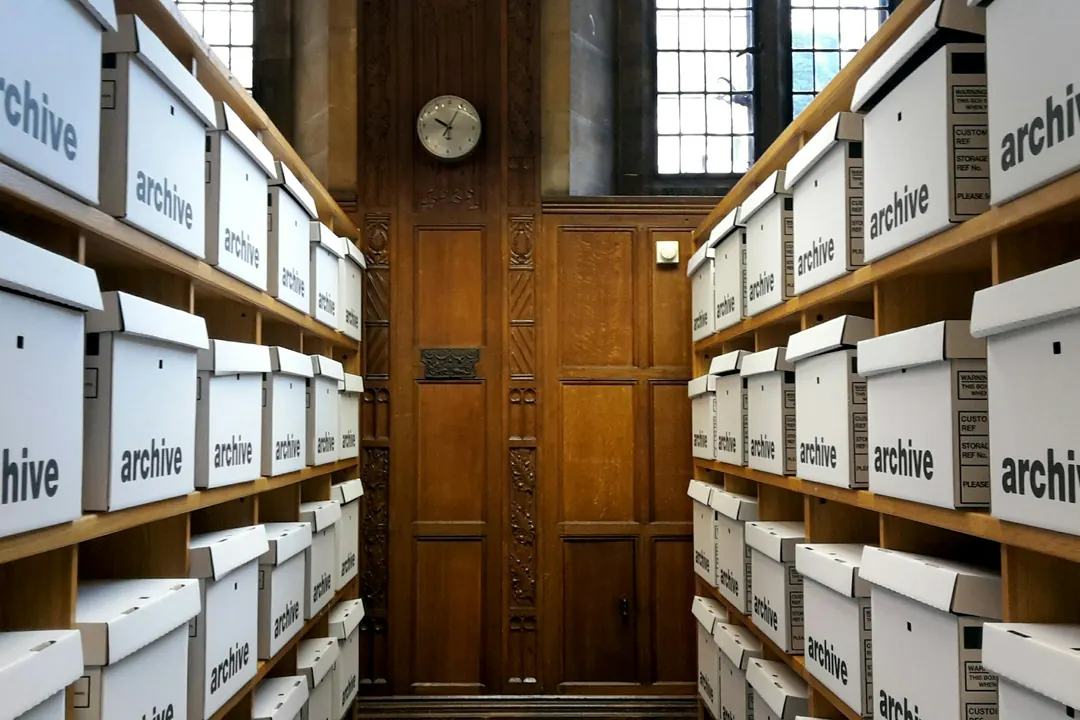
A system of record is the one system your business treats as the authoritative source for a particular kind of data, such as customers, invoices or staff. When two systems disagree, the system of record wins.
IBM puts it as an authoritative source of business data, and adds that each system of record is authoritative for a specific type of data. CRM, HR and ERP software are its examples.
What counts as a system of record?
A system qualifies by being the place where a type of data is created and corrected, and the place the others trust. IBM says it must be continuously updated, and that new data must be validated before it goes in. It is also not the same as a single source of truth, which IBM calls a principle or practice for designing data systems.
| Data | System of record | Others hold | Who edits it |
|---|---|---|---|
| Customer contact details | CRM | Email tool, accounts package | Account owner |
| Invoices and payments | Accounts package | CRM, reports | Finance |
| Job status and dates | Operations system | Customer emails | Job owner |
| Staff details and leave | HR system | Rota, payroll | HR |
One row per type of data, one system per row. If you cannot fill a row, that is the first problem to fix.
A caution on the term: NIST’s glossary uses system of records in the US Privacy Act sense, a collection of records about individuals under an agency’s control. That is a different meaning from the business one used here.
Why does it decide a purchase?
Because without one, IBM warns, different teams and applications can end up working with inconsistent, incomplete or inaccurate data. A new tool that holds its own copy of customers adds another place to be wrong. The shared lists themselves are master data.
Some rules are hard to meet without the answer. HMRC’s Making Tax Digital notice says the required VAT records must be kept, maintained and preserved digitally, and that software must record and preserve them and produce returns from the data held. VAT records generally need keeping for at least 6 years. Under UK GDPR, personal data must be accurate and, where necessary, kept up to date, with inaccurate data erased or rectified without delay. We think you cannot do that reliably without a named master copy. Check the current HMRC notice, as the one cited is dated April 2022. This is not legal or tax advice.
What should you ask a supplier?
| Ask | A good answer sounds like | Why it matters |
|---|---|---|
| Which records will this tool own, and which will it only copy? | A list of record types, marked owns or copies. | Prevents a second customer list. |
| If a record is changed here, what happens in our other systems? | Changes pass one way, automatically, and are logged. | Copies drift without a rule. |
| Can we export our records in full? | A full export in a named format. | The record should leave with you. |
| How is a correction made, and by whom? | A named role, with a history of changes. | Accuracy needs an owner. |
Joining the systems is the job of an interface; see what is an API. How a customer record works beyond a CRM is in one customer record.
What if you have two of everything?
After a merger or acquisition, each business has its own record for customers and invoices. Choosing one record for each type, and retiring or connecting the other, is the main job; one set of numbers across two businesses covers it.
Questions people ask
It is the one system you treat as correct for a type of data. If your CRM is the record for customer contact details, and an email tool shows a different address, the CRM is right and the email tool is corrected from it. Each type of data should have one such system.
They are related but not the same. IBM describes a system of record as a specific system that holds authoritative data for one type of data, and a single source of truth as a principle or practice for designing data systems. A business often has several systems of record, one per type of data.
For customer details, often yes. But invoices are usually recorded in your accounts package, and job status in whatever runs the work. Decide per type of data, write it down, and make sure other tools copy from the record instead of keeping their own.
Take the system of record as correct, fix the other, and find out why they diverged. If there is no agreed record, someone must decide which is right case by case, which is slow and error-prone. Choose a record for each type of data, then connect the others to it.
Further reading
- IBM: What is a system of record?
Authoritative source of business data, continuous updating, risks of inconsistency. Supplier documentation. Free.
- NIST glossary: system of record
The US Privacy Act sense of system of records, which differs from the business sense. Free.
- HMRC: VAT Notice 700/22 Making Tax Digital for VAT
Digital records and functional compatible software, updated 1 April 2022. Free.
- HMRC: Record keeping, VAT Notice 700/21
VAT records kept for at least 6 years, updated 18 March 2024. Free.
- legislation.gov.uk: UK GDPR Article 5
The accuracy principle and accountability. Free.
AIforCompanies · https://aiforcompanies.co.uk/insights/what-is-a-system-of-record
Have a problem this does not solve?
Book a discovery call. Tell us what is slowing the business down, and we will say what we would build and whether it is worth doing.